
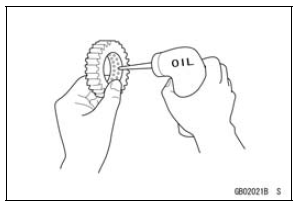
It is important to lubricate rotating or sliding parts during assembly to minimize wear during initial operation. Lubrication points are called out throughout this manual, apply the specific oil or grease as specified.
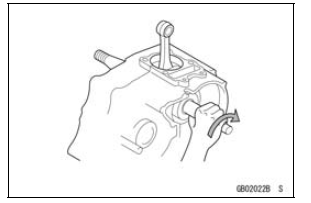
Direction of Engine Rotation
When rotating the crankshaft by hand, the free play amount of rotating direction will affect the adjustment. Rotate the crankshaft to positive direction (clockwise viewed from output side).
 Oil Seal, Grease Seal
 Electrical Leads
Wheel Rotation Sensor Rotor Inspection
Remove:
Wheels (see Front/Rear Wheel Removal in the
Wheels/Tires chapter)
Brake Disc Mounting Bolts [A]
Sensor Rotor [B]
Front Wheel [C]
Rear Wheel [D]
Visually inspect the wheel rotation sensor rotor.
If the rotor is deformed or damaged (chipped teeth [A]),
replace the ...
General Lubrication
Lubricate the points shown below,
with either motor oil or regular grease,
in accordance with the Periodic Maintenance
Chart or whenever the vehicle
has been operated under wet or rainy
conditions.
Before lubricating each part, clean off
any rusty spots with rust remover and
wipe off any g ...
Alternator Cover Installation
Using a high flash-point solvent, clean off any oil or dirt
that may be on the silicone sealant coating area. Dry
them with a clean cloth.
Apply silicone sealant to the alternator lead grommet and
crankcase halves mating surface [A] on the front and rear
sides of the cover mount.
Sea ...