
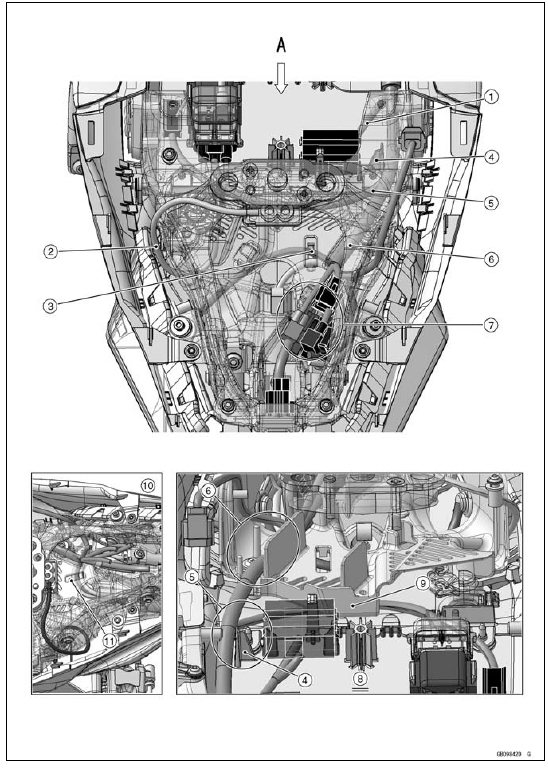
1. Run the fuse box 2 lead in front of the rib for the fuse box 2.
2. Seat Lock Cable
3. Hook the licence plate light lead and the left turn signal light lead on the projection of the tool kit case.
4. Rib for Fuse Box 2
5. Run the starter relay lead in back of the rib for the fuse box 2 and quick rivet. Take care not to stick the quick rivet.
6. Run the main harness between the rib and projection of the tool kit case.
7. Place all connectors into the dust cover.
8. Viewed from A
9. Run the starter relay lead under the tool kit case.
10. US, CA and CAL Models
11. Hook the licence plate light lead, the left and right turn signal light leads on the projection of the tool kit case.
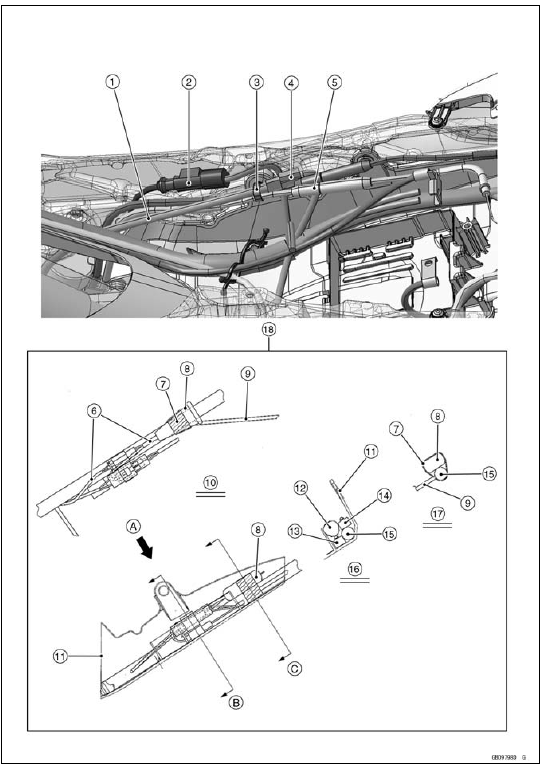
1. Run the rear brake light switch lead to inside of the exhaust butterfly valve cables.
2. Rear Wheel Rotation Sensor Lead Connector (Place it in front of the clamp and between the exhaust butterfly valve cables and the frame.)
3. Clamp (Hold the exhaust butterfly valve cables and the rear brake light switch lead. Insert the strip of the clamp from lower side.)
4. Rear Brake Light Switch Lead Connector (Place it in back of the clamp and above the rear wheel rotation sensor lead.)
5. Run the exhaust butterfly valve cables to inside of the rear brake light switch lead.
6. Do not slack the leads.
7. Tape (Hold the main harness and the wire lead.): L = 150
 200 mm (5.91
 7.87 in.)
8. Wire Lead
9. Fuse Box 1 Lead
10. Viewed from A
11. Rear Fender Front
12. Exhaust Butterfly Valve Actuator Connector (3-pin)
13. 2-pin Connector (Wire Lead – Exhaust Butterfly Valve Actuator)
14. 2-pin Connector (Main Harness – Wire Lead)
15. Main Harness
16. Viewed from B
17. Viewed from C
18. ZX1000JB/KB Models
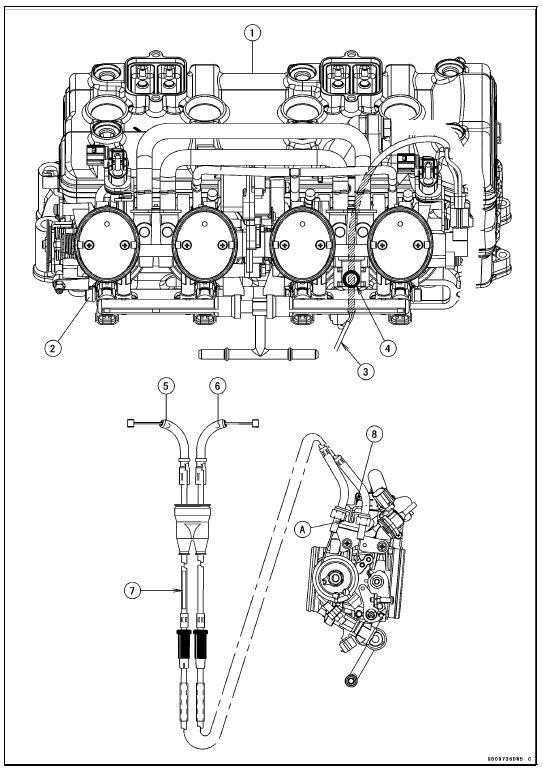
1. Cylinder Head Cover
2. Throttle Body Assy
3. Run the throttle sensor leads leftward.
4. Run the throttle sensor leads under the throttle body assy and between the #3 and #4 of the throttle body assy holder.
5. Throttle Cable (Accelerator)
6. Throttle Cable (Decelerator)
7. White Letters
8. Hold both the cables with the clamp of the accelerator cable, and hook the clamp to the hole [A].
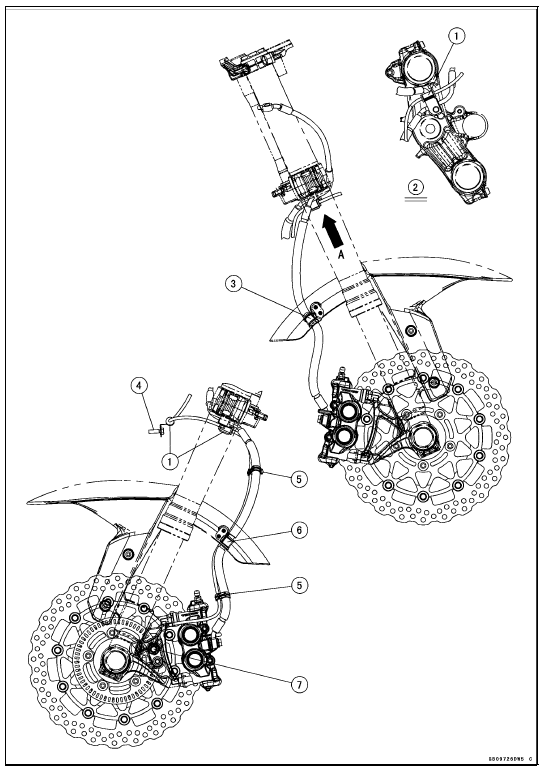
1. Clamp (Hold the damper of the front wheel rotation sensor lead.)
2. Viewed from A
3. Clamp (Run the front brake hose.)
4. Headlight Mounting Bolt
5. Clamp (Hold the front brake hose and the front wheel rotation sensor lead at the white painted position of the lead. Run the lead in front of the hose.)
6. Clamp (Run the front brake hose only.)
7. Front Wheel Rotation Sensor
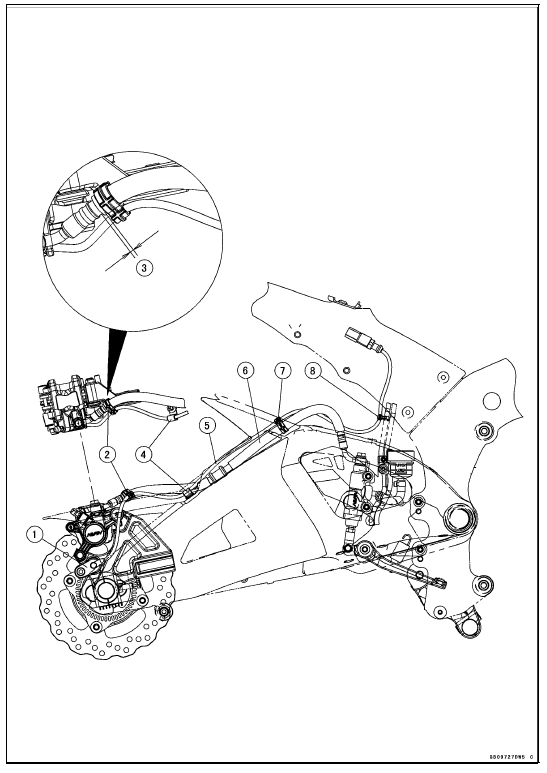
1. Rear Wheel Rotation Sensor
2. Clamp (Hold the rear brake hose and the rear wheel rotation sensor lead at the white painted position of the lead. Run the lead to outside of the hose.)
3. About 0  5 mm (0
 0.2 in.)
4. Clamp (Hold the rear wheel rotation sensor lead.)
5. Run the rear wheel rotation sensor lead to outside of the mud guard.
6. Run the rear brake hose to inside of the mud guard.
7. Clamp (Hold the rear brake hose and the rear wheel rotation sensor lead at the white painted position of the lead. Run the lead above the hose.)
8. Clamp (Hold the exhaust buttery valve cable and the rear wheel rotation sensor lead at the white painted position of the lead. Run the lead in back of the cable.)
 ZX1000JB/KB Models
 KIBS Equipped Models
Clutch Removal
Remove:
Clutch Cover (see Clutch Cover Removal)
Clutch Spring Bolts [A]
Clutch Springs (with Clutch Spring Holders)
Clutch Spring Plate [B]
Pusher [C]
Remove:
Friction Plates (10) [A]
Steel Plates (9) [B]
Spring [C]
Spring Seat [D]
Hold the sub clutch hub [A] ...
Key Registration
Case 1: When the ignition key has been lost or additional
spare ignition key is required.
Prepare a new spare ignition key.
Cut the key in accordance with the shape of the current
ignition key.
Remove the rear seat (see Rear Seat Removal in the
Frame chapter).
Remove the immobilizer/K ...
Self-Diagnosis Procedures
NOTE
Use a fully charged battery when conducting
self-diagnosis. Otherwise, the light (LED) and symbol
do not light or blink.
Turn the ignition switch to ON.
When a problem occurs with DFI system and ignition system,
the warning indicator light (LED) [A] goes on and
FI warning symbol ...