
Kawasaki Ninja Owners Manual: Location of parts

Kawasaki Ninja Owners Manual / Location of parts

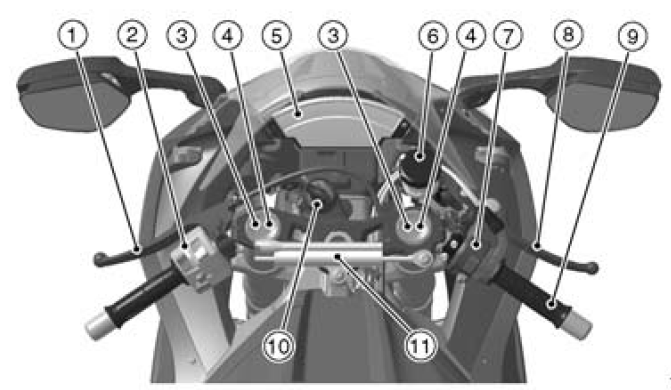
Location of parts


  1. Clutch Lever
  2. Left Handlebar Switches
  3. Rebound Damping Force Adjuster (Front Fork)
  4. Compression damping force adjuster (Front Fork)
  5. Meter Instruments
  6. Brake Fluid Reservoir (Front)
  7. Right Handlebar Switches
  8. Front Brake Lever
  9. Throttle Grip
  10. Ignition Switch/Steering Lock
  11. Electronic Steering Damper

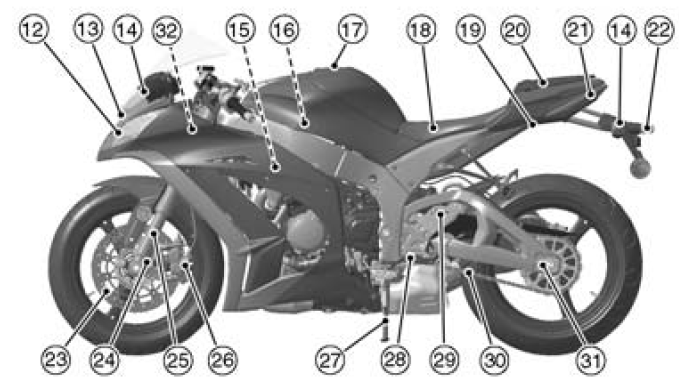
Location of parts


  1. Headlight
  2. Air Cleaner Intake
  3. Turn Signal Lights
  4. Spark Plugs
  5. Air Cleaner
  6. Fuel Tank
  7. Rider’s Seat
  8. Seat Lock
  9. Passenger’s Seat
  10. Tail/Brake Light
  11. License Plate Light
  12. Brake Disc
  13. Spring Preload Adjuster
  14. Front Fork
  15. Brake Caliper
  16. Side Stand
  17. Shift Pedal
  18. Compression damping force adjusters
  19. Drive Chain
  20. Chain Adjuster
  21. Fuse Box

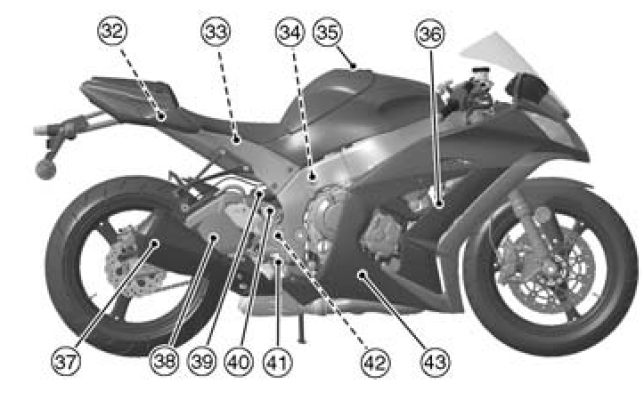
Location of parts


  1. Fuse Boxes
  2. Battery
  3. Rebound damping force adjuster
  4. Fuel Tank Cap
  5. Coolant Reserve Tank
  6. Muffler
  7. Swingarm
  8. Rear Shock Absorber
  9. Brake Fluid Reservoir (Rear)
  10. Rear Brake Pedal
  11. Rear Brake Light Switch
  12. Oil Level Inspection Window
Serial number locations
The engine and frame serial numbers are used to register the motorcycle. They are the only means of identifying your particular machine from others of the same model type. These serial numbers m ...

Loading and accessories information
WARNINGIncorrect loading, improper installation or use of accessories, or modification of your motorcyclemay result in an unsafe riding condition. Before you ride the motorcycle, ...

Other materials:

Chain Slack Inspection
Set the motorcycle up on its side stand. Rotate the rear wheel to find the position where the chain is tightest, and measure the maximum chain slack by pulling up and pushing down the chain midway between the engine sprocket and rear wheel sprocket. A. Chain Slack If the ...

Swingarm Installation
Visually inspect the chain guide [A]. Replace the chain guide if it shows any signs of abnormal wear or damage. Apply a non-permanent locking agent to the threads of the chain guide bolt [B]. Apply plenty of grease to the lip of the oil seals [A]. Be sure to install the oil seals ...

Keys
This motorcycle has a combination key, which is used for the ignition switch, steering lock, seat lock, and fuel tank cap. Included with the key is a key number, which may be stamped on a separate plate. Record the key number in the space provided and store the number in a safe place. If y ...