
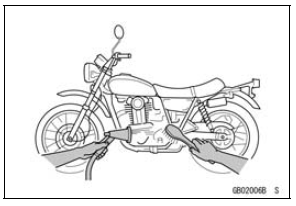
Clean the vehicle thoroughly before disassembly. Dirt or other foreign materials entering into sealed areas during vehicle disassembly can cause excessive wear and decrease performance of the vehicle.
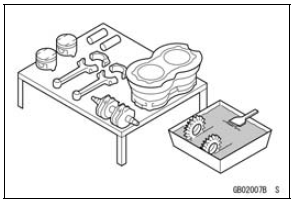
Arrangement and Cleaning of Removed Parts
Disassembled parts are easy to confuse. Arrange the parts according to the order the parts were disassembled and clean the parts in order prior to assembly.
 Battery Ground
 Storage of Removed Parts
Air Switching Valve (Service Code 64)
Air Switching Valve Removal/Installation
Refer to the Air Switching Valve Removal/Installation in
the Engine Top End chapter.
Air Switching Valve Inspection
Refer to the Air Switching Valve Unit Test in the Electrical
System chapter.
If the air switching valve [A] is normal, check ...
Rear Turn Signal Light Bulb Replacement
Remove the upper seat cover (see Seat Cover Removal
in the Frame chapter).
Disconnect the tail/brake light connector [A].
Turn the socket [A] counterclockwise and remove the
socket together with the bulb.
Push and turn the turn signal light bulb [A] counterclockwise
an ...
What Are The Dealership’s Responsibilities?
Your Kawasaki dealer offers a wide range of services, parts, accessories, and
information on your product and on Kawasaki.
Each dealer is independently owned and operated and is responsible for the
dealership’s
operations, its repair, warranty, and service work, and its personnel.
Your dea ...