
There are two adjustments you can make to the compression damping force.
High Speed Compression Damping Adjuster [A] Low Speed Compression Damping Adjuster [B]
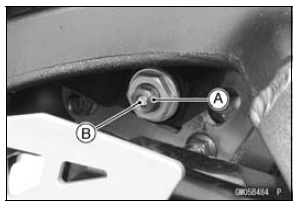
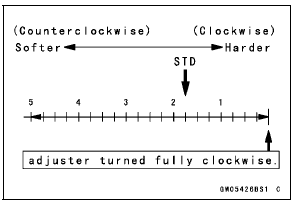
The standard adjuster setting is the 1 3/4 turns out from the fully clockwise position.
High Speed Compression Damping Force Adjustment
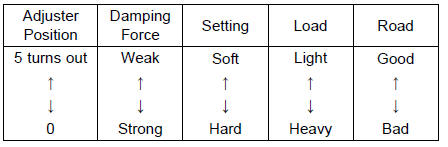
NOTE
When turning the high speed compression damping force adjuster (outside), turn the low speed compression damping force adjuster (inside) too. But, the low speed compression damping force (setting position) dose not change.
The standard adjuster setting is the 1 3/4 turns out from the fully clockwise position.
Low Speed Compression Damping Force Adjustment
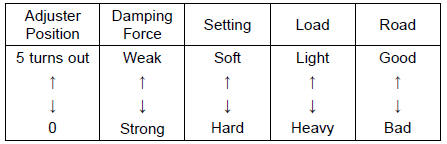
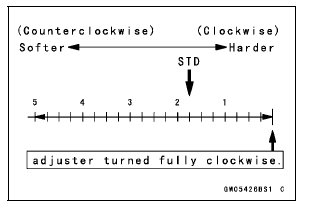
 Rebound Damping Force Adjustment
 Spring Preload Adjustment
Oxygen Sensor Heater Resistance Inspection
Turn the ignition switch to OFF.
Remove the fuel tank (see Fuel Tank Removal in the Fuel
System (DFI) chapter).
Disconnect the oxygen sensor lead connector [A].
Connect a digital meter [A] to the terminals in the oxygen
sensor lead connector [B].
Measure the oxygen sensor heat ...
General Precautions
Frequent and proper care of your
Kawasaki motorcycle will enhance
its appearance, optimize overall performance,
and extend its useful life.
Covering your motorcycle with a high
quality, breathable motorcycle cover
will help protect its finish from harmful
UV rays, pollutants, and reduce the ...
Subthrottle Valve Actuator Inspection
NOTE
Be sure the battery is fully charged.
Remove the air cleaner housing (see Air Cleaner Housing
Removal in the Fuel System (DFI) chapter).
Turn the ignition switch to ON.
Check to see that all the subthrottle valves [A] open and
close smoothly.
Turn the ignition switch to OFF.
I ...