
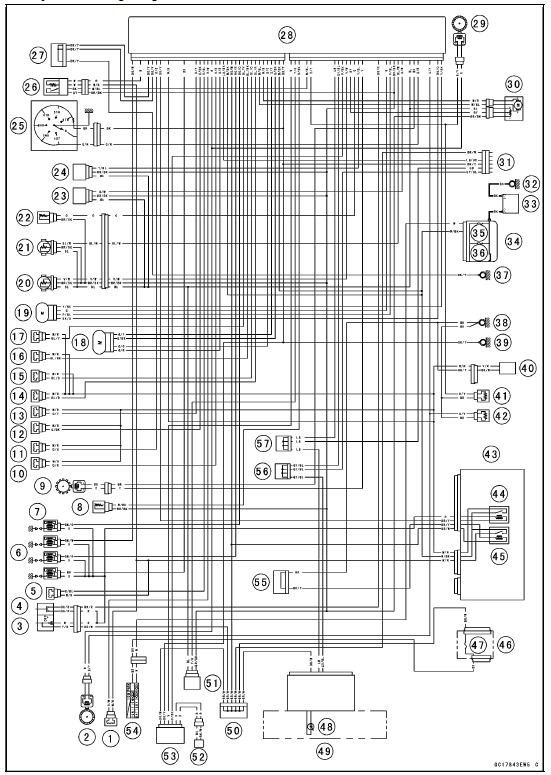
Part Names
1. Air Intake Solenoid Valve (Other than US, CA and CAL Models)
2. Front Wheel Rotation Sensor
3. Engine Stop Switch
4. Starter Button
5. Air Switching Valve
6. Stick Coil #1, #2, #3, #4
7. Spark Plugs
8. Intake Air Temperature Sensor
9. Crankshaft Sensor
10. Secondary Fuel Injector #1
11. Secondary Fuel Injector #2
12. Secondary Fuel Injector #3
13. Secondary Fuel Injector #4
14. Primary Fuel Injector #1
15. Primary Fuel Injector #2
16. Primary Fuel Injector #3
17. Primary Fuel Injector #4
18. Idle Speed Control Valve Actuator
19. Subthrottle Valve Actuator
20. Main Throttle Sensor
21. Subthrottle Sensor
22. Water Temperature Sensor
23. Intake Air Pressure Sensor #2
24. Intake Air Pressure Sensor #1
25. Gear Position Switch
26. Oxygen Sensor (Equipped Models)
27. Joint Connector E
28. ECU
29. Rear Wheel Rotation Sensor
30. Exhaust Butterfly Valve Actuator
31. Immobilizer (Equipped Models)/Kawasaki Diagnostic System Connector
32. Engine Ground
33. Battery
34. Starter Relay
35. Main Fuse 30 A
36. ECU Fuse 15 A
37. Frame Ground 2
38. Frame Ground 3
39. Frame Ground 1
40. Fuel Pump
41. Resister R
42. Resister F
43. Relay Box
44. Fuel Pump Relay
45. ECU Main Relay
46. Fuse Box 1
47. Ignition Fuse 15 A
48. Oil Pressure/Water Temperature/FI/Immobilizer Warning Indicator Light
49. Meter Unit
50. Joint Connector F
51. Vehicle-down Sensor
52. Immobilizer Antenna (Equipped Models)
53. Immobilizer Amplifier (Equipped Models)
54. Ignition Switch
55. Joint Connector A
56. Joint Connector C
57. Joint Connector D
 DFI System
 DFI System Wiring Diagram (KIBS Equipped Models)
Transmission Assy Removal
Remove:
Engine Sprocket (see Engine Sprocket Removal in the
Final Drive chapter)
Gear Position Switch (see Gear Position Switch Removal
in the Electrical System chapter)
Collar [A]
O-ring [B]
Remove:
Clutch (see Clutch Removal in the Clutch chapter)
Shift Shaft Assembly ...
Ball Bearing and Needle Bearing
Do not remove pressed ball or needle unless removal is
absolutely necessary. Replace with new ones whenever
removed. Press bearings with the manufacturer and size
marks facing out. Press the bearing into place by putting
pressure on the correct bearing race as shown.
Pressing the incorrect ra ...
Chassis Parts Lubrication
Before lubricating each part, clean off any rusty spots with
rust remover and wipe off any grease, oil, dirt, or grime.
Lubricate the points listed below with indicated lubricant.
NOTE
Whenever the vehicle has been operated under
wet or rainy conditions, or especially after using a
high ...