
The scheduled maintenance must be done in accordance with this chart to keep the motorcycle in good running condition. The initial maintenance is vitally important and must not be neglected.
Periodic Inspection
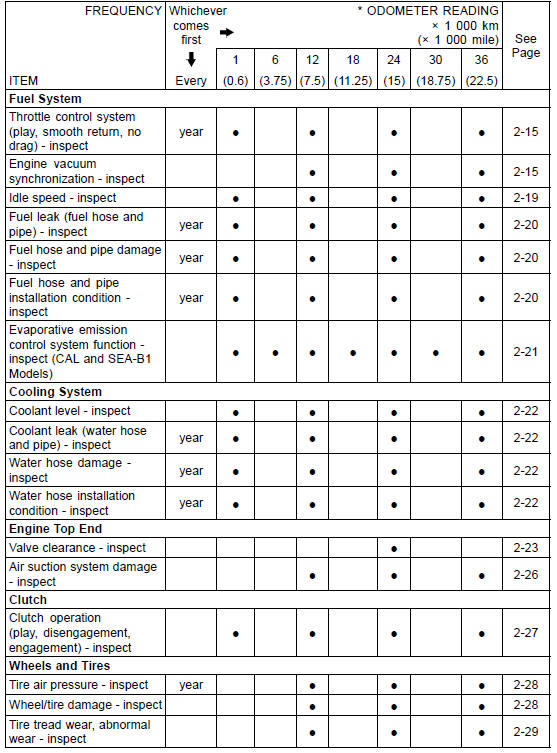
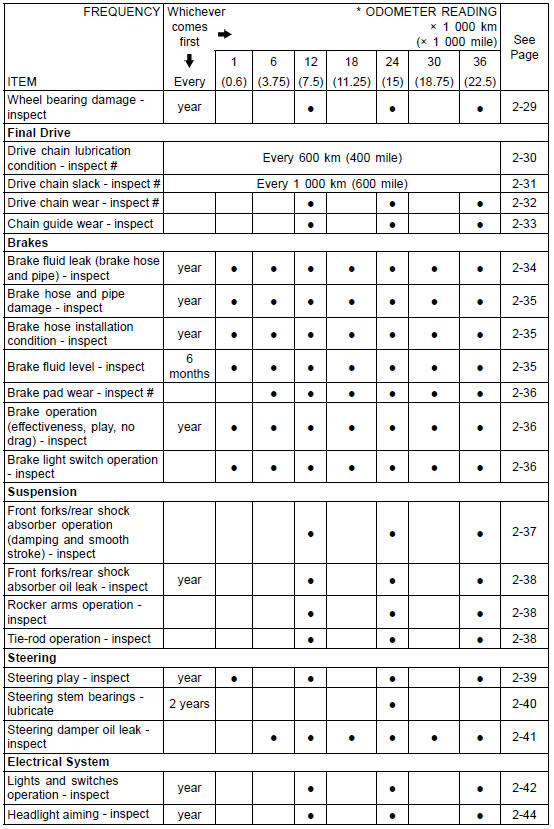
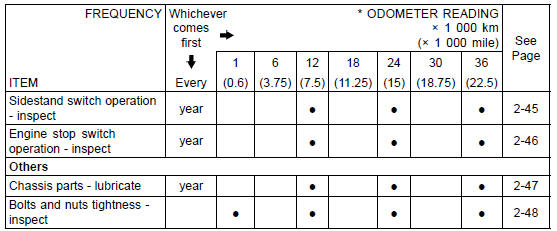
#: Service more frequently when operating in severe conditions; dusty, wet, muddy, high speed or frequent starting/stopping.
*: For higher odometer readings, repeat at the frequency interval established here.
Periodic Replacement Parts
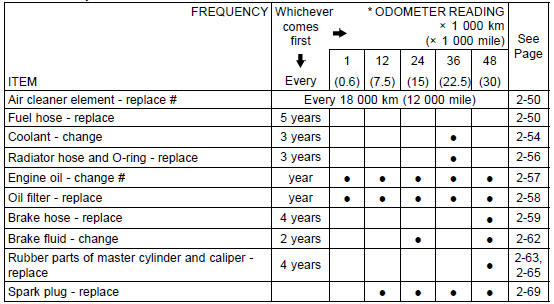
#: Service more frequently when operating in severe conditions; dusty, wet, muddy, high speed or frequent starting/stopping.
*: For higher odometer readings, repeat at the frequency interval established here.
 Torque and Locking Agent
Fuel Pump Removal
WARNINGGasoline is extremely flammable and can be
explosive
under certain conditions, creating the
potential for serious burns. Make sure the area is
well-ventilated and free from any source of flame
or sparks; this includes any appliance with a pilot
light. Do not smoke. T ...
Starter Motor Assembly
Install the positive brush assy [A] and the starter motor
terminal [B] as shown in the figure.
Replace the O-ring [C] with a new one, and install it.
Install:
Brush Springs [A]
Negative Brush Assy [B]
Turn the stopper side [C] to inside.
Tighten:
Torque - Brush Holder S ...
KIBS Hydraulic Unit Installation
NOTICE
Brake fluid quickly ruins painted plastic surfaces;
any spilled fluid should be completely washed away
immediately.
Install the KIBS hydraulic unit together with the bracket.
Before installing the brake pipe, check to see that there is
no damage on the threads of the brake pipe joi ...
