
Turn the oil seal side to the bottom.
Special Tool - Bearing Driver Set: 57001-1129
Turn the flat side to the bottom.
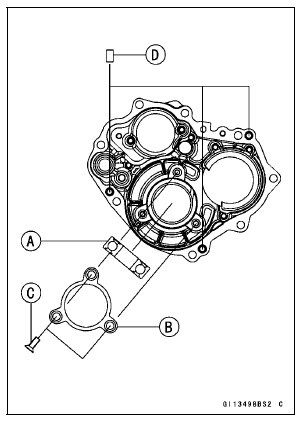
Turn the stepped edge to upside.
Special Tool - Bearing Driver Set: 57001-1129
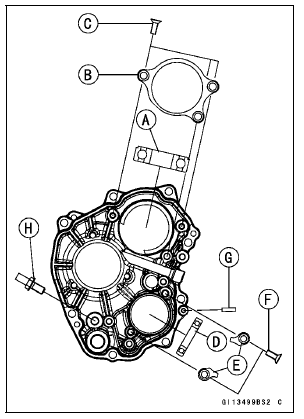
Turn the flat side to the bottom.
Tighten: Torque - Transmission Case Bearing Holder Bolts: 4.9 N·m (0.50 kgf·m, 43 in·lb)
Turn the flat side to the bottom.
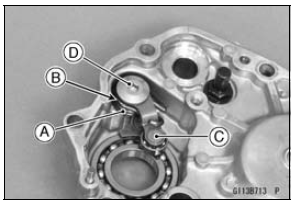
Spring [A] Washer [B] Gear Positioning Lever [C]
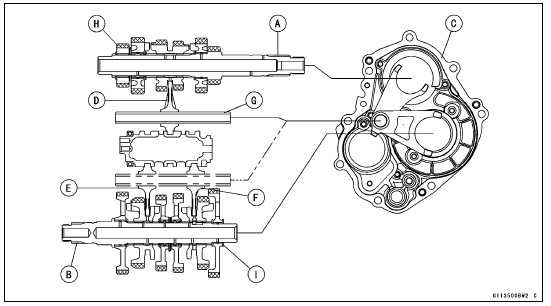
The shift fork [D] for drive shaft has “A2� mark. Turn the mark to the upside.
The shift forks [E] for output shaft have “A1� mark. Turn the mark to the bottom.
The shift forks [F] for output shaft have “A3� mark. Turn the mark to the bottom.
 Transmission Assy Disassembly
 Transmission Assy Installation
Lights and Switches Operation Inspection
First Step
Set the gear position in the neutral position.
Turn the ignition switch to ON.
The following lights should go on according to below table.
If the following light does not go on, inspect the meter
unit (see Meter Unit Inspection in the Electrical System
chapter).
...
Lighting System
This motorcycle adopt the daylight system and have a
headlight relay in the relay box. The headlight does not
go on when the ignition switch and the engine stop switch
are first turned on. The headlight comes on after the starter
button is released and stays on until the ignition switch is
turn ...
Brake Fluid Level Inspection
Check that the brake fluid level in the front brake reservoir
[A] is above the lower level line [B].
NOTE
Hold the reservoir horizontal by turning the handlebar
when checking brake fluid level.
If the fluid level is lower than the lower level line, fill the
reservoir to the upper lev ...