
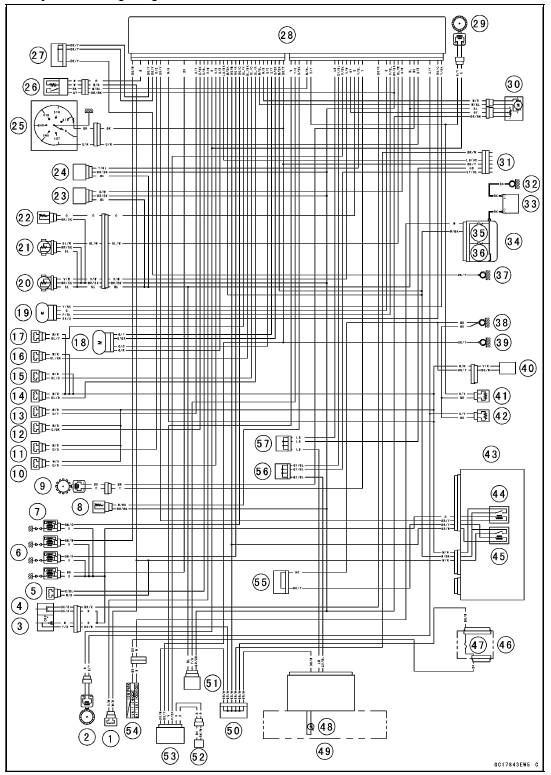
Part Names
1. Air Intake Solenoid Valve (Other than US, CA and CAL Models)
2. Front Wheel Rotation Sensor
3. Engine Stop Switch
4. Starter Button
5. Air Switching Valve
6. Stick Coil #1, #2, #3, #4
7. Spark Plugs
8. Intake Air Temperature Sensor
9. Crankshaft Sensor
10. Secondary Fuel Injector #1
11. Secondary Fuel Injector #2
12. Secondary Fuel Injector #3
13. Secondary Fuel Injector #4
14. Primary Fuel Injector #1
15. Primary Fuel Injector #2
16. Primary Fuel Injector #3
17. Primary Fuel Injector #4
18. Idle Speed Control Valve Actuator
19. Subthrottle Valve Actuator
20. Main Throttle Sensor
21. Subthrottle Sensor
22. Water Temperature Sensor
23. Intake Air Pressure Sensor #2
24. Intake Air Pressure Sensor #1
25. Gear Position Switch
26. Oxygen Sensor (Equipped Models)
27. Joint Connector E
28. ECU
29. Rear Wheel Rotation Sensor
30. Exhaust Butterfly Valve Actuator
31. Immobilizer (Equipped Models)/Kawasaki Diagnostic System Connector
32. Engine Ground
33. Battery
34. Starter Relay
35. Main Fuse 30 A
36. ECU Fuse 15 A
37. Frame Ground 2
38. Frame Ground 3
39. Frame Ground 1
40. Fuel Pump
41. Resister R
42. Resister F
43. Relay Box
44. Fuel Pump Relay
45. ECU Main Relay
46. Fuse Box 1
47. Ignition Fuse 15 A
48. Oil Pressure/Water Temperature/FI/Immobilizer Warning Indicator Light
49. Meter Unit
50. Joint Connector F
51. Vehicle-down Sensor
52. Immobilizer Antenna (Equipped Models)
53. Immobilizer Amplifier (Equipped Models)
54. Ignition Switch
55. Joint Connector A
56. Joint Connector C
57. Joint Connector D
 DFI System
 DFI System Wiring Diagram (KIBS Equipped Models)
Solenoid Valve Inspection (Service Code b 13, b 14, b 17, b 18)
The solenoid valve is built in the KIBS Hydraulic Unit [A].
Therefore the solenoid valve cannot be checked directly.
Perform the Pre-Diagnosis Inspection 1 and 2 (see Inquiries
to Rider in the Brakes chapter).
If any of these service codes appears even if all checks
are ended, replace t ...
Coolant Temperature Meter
The coolant temperature gauge indicates
temperature of the engine
coolant. The “ � symbol is displayed
if the coolant temperature meter
is selected.
A. Coolant Temperature Meter
B. Warning Indicator Light (Red)
C. “ � Symbol
If the coolant temperature is below
40°C (104°F ...
Valve Installation
NOTICE
Do not lap the valve to the valve seat, using the
grinding compound. It will come off oxide film
treated surface of the valve.
Replace the oil seal with a new one.
Apply a thin coat of molybdenum disulfide grease to the
valve stem before valve installation.
Install the springs so ...