
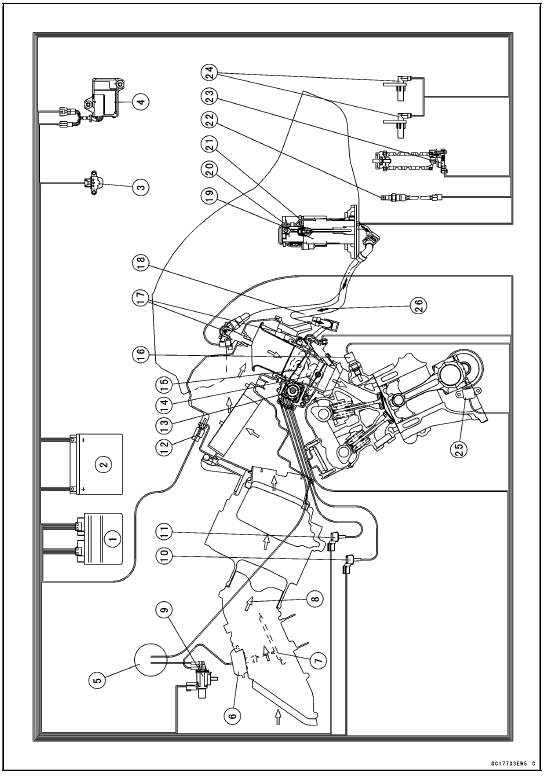
1. ECU
2. Battery
3. Vehicle-down Sensor
4. Exhaust Butterfly Valve Actuator
5. Vacuum Chamber (Other than US, CA and CAL Models)
6. Air Intake Valve Actuator (Other than US, CA and CAL Models)
7. Air Intake Valve (Other than US, CA and CAL Models)
8. Air Flow
9. Air Intake Solenoid Valve (Other than US, CA and CAL Models)
10. Intake Air Pressure Sensor #2
11. Intake Air Pressure Sensor #1
12. Intake Air Temperature Sensor
13. Subthrottle Valve Actuator
14. Main Throttle Sensor
15. Subthrottle Sensor
16. Water Temperature Sensor
17. Fuel Injectors
18. Primary Fuel Hose
19. Fuel Pump
20. Fuel Filter
21. Pressure Regulator
22. Oxygen Sensor (Equipped Models)
23. Gear Position Switch
24. Wheel Rotation Sensors
25. Crankshaft Sensor
26. Fuel Flow
 Exploded View
 DFI System Wiring Diagram
Crankshaft Sensor Peak Voltage Inspection
NOTE
Be sure the battery is fully charged.
Using the peak voltage adapter [A] is more reliable way
to determine the condition of the crankshaft sensor than
crankshaft sensor internal resistance measurements.
Disconnect the crankshaft sensor lead connector (see
Crankshaft Sensor ...
Tire Wear, Damage
As the tire tread wears down, the tire
becomes more susceptible to puncture
and failure. An accepted estimate is
that 90% of all tire failures occur during
the last 10% of tread life (90% worn).
So it is false economy and unsafe to
use the tires until they are bald
In accordance with the ...
Balance Adjustment
If the wheel always stops in one position, provisionally
attach a balance weight [A] on the rim at the marking using
adhesive tape.
Rotate the wheel 1/4 turn [B], and see whether or not the
wheel stops in this position. If it does, the correct balance
weight is being used.
If the whe ...