
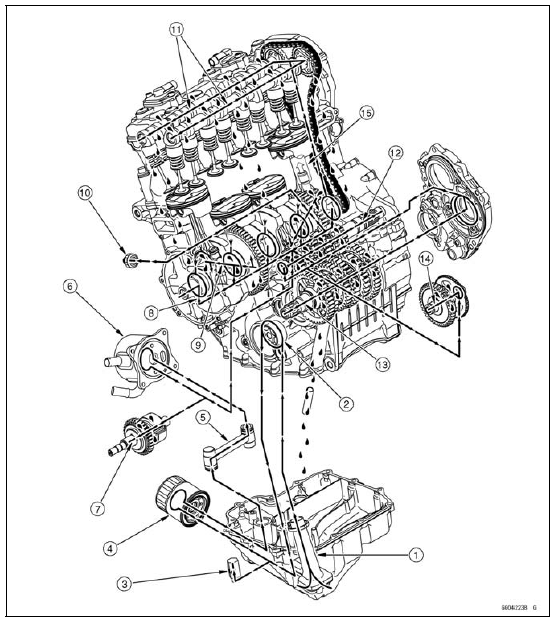
1. Oil Screen
2. Oil Pump
3. Oil Pressure Relief Valve
4. Oil Filter
5. Oil Pipe
6. Oil Cooler
7. Balancer Oil Passage
8. Main Oil Passage
9. Crankshaft Oil Passage
10. Oil Pressure Switch
11. Camshaft Oil Passages
12. Drive Shaft Oil Passage
13. Output Shaft Oil Passage
14. Starter Clutch Oil Passage
15. Blowby Gas (Crankcase → Air Cleaner Housing)
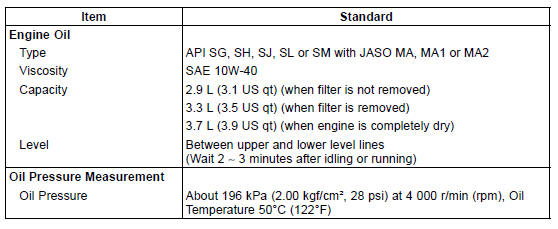
Specifications
 Exploded View
 Special Tools and Sealant
Meter Operation Inspection
Check 1-1: Switching Inspection
Turn the ignition switch to ON and check the following.
The all LCD segments [A] appear for 3 seconds.
The warning indicator light (Red LED) [B] goes on for 3
seconds and then goes off in a moment after that goes
off.
The warning indicator light (Yellow LED ...
Coupling Bearing Inspection
Since the coupling bearing is made to extremely close
tolerances, the clearance can not normally be measured.
NOTE
It is not necessary to remove the coupling bearing for
inspection. If the bearing is removed, it will need to be
replaced with a new one.
Turn the bearing in the coupling b ...
Hoses and Pipes
Hose Installation
Install the hoses and pipes, being careful to follow bending
direction. Avoid sharp bending, kinking, flattening or
twisting.
Run the hoses (see Cable, Wire, and Hose Routing section
in the Appendix chapter).
Install the clamp [A] as near as possible to the hose end
...