
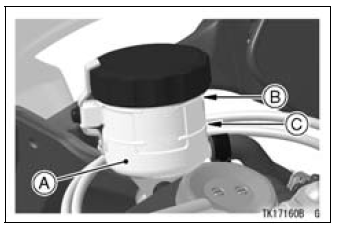
A. Front Brake Fluid Reservoir
B. Upper Level Line
C. Lower Level Line
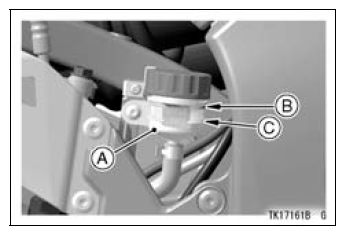
A. Rear Brake Fluid Reservoir
B. Upper Level Line
C. Lower Level Line
| WARNING Mixing brands and types of brake fluid can reduce the brake system’s effectiveness and cause an accident resulting in injury or death. Do not mix two brands of brake fluid. Change the brake fluid in the brake line completely if the brake fluid must be refilled but the type and brand of the brake fluid that is already in the reservoir are unidentified. |
NOTE
First, tighten until slight resistance is felt, which indicates that the cap is seated on the reservoir body, and tighten the cap an additional 1/6 turn while holding the brake fluid reservoir body.
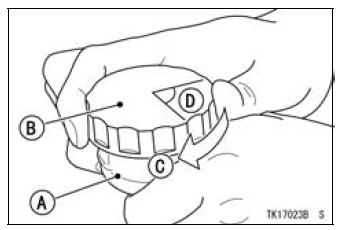
A. Reservoir
B. Cap
C. Clockwise
D. 1/6 turn
Fluid Change
Have the brake fluid changed by an authorized Kawasaki dealer.
 Fluid Requirement
 Front and Rear Brakes
Air Cleaner Housing Assembly
Install the ducts to the air cleaner housing.
Fit the projections [A] of the duct into the slits [B] on the
air cleaner housing.
Tighten the screws [A].
Torque - Air Cleaner Housing Duct Screws: 1.1 N·m (0.11
kgf·m, 10 in·lb)
Install:
Air Cleaner Gasket [A]
Duct [B] ...
Compression Damping Force Adjustment
To adjust the compression damping force, turn the compression
damping adjuster [A].
The standard adjuster setting is the 4 1/2 turns out from
the fully clockwise position.
WARNINGIf both adjusters are not adjusted
equally, handling
may be impaired and a hazardous condition ma ...
Check 2-1: Speedometer Inspection
Using the suitable stand, raise the rear wheel off the
ground.
Rotate the rear wheel by hand or start the engine.
Check that the display changes speedometer.
If the display function does not work, check the following
parts.
Rear Wheel Rotation Sensor (see Wheel Rotation Sensor
Inspe ...