
Replace the gasket if it is damaged.
If they are clogged, remove the tank and drain it, and then blow the breather free with compressed air.
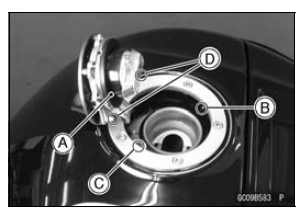
NOTICE
Do not apply compressed air to the air vent holes [D] in the tank cap. This could cause damage and clogging of the labyrinth in the cap.
 Fuel Tank Installation
 Fuel Tank Cleaning
Check 2-1: Speedometer Inspection
Using the suitable stand, raise the rear wheel off the
ground.
Rotate the rear wheel by hand or start the engine.
Check that the display changes speedometer.
If the display function does not work, check the following
parts.
Rear Wheel Rotation Sensor (see Wheel Rotation Sensor
Inspe ...
Cylinder Head Cover Installation
Replace the cylinder head cover gasket [A] with a new
one
Using a high flash-point solvent, clean off any oil or dirt
that may be on the silicone sealant coating area. Dry
them with a clean cloth.
Apply silicone sealant [B] to the cylinder head as shown
in the figure.
Sealant - Li ...
Radiator and Cooling Fan
Check the radiator fins for obstruction
by insects or mud. Clean off
any obstructions with a stream of
low-pressure water.
WARNINGThe cooling fan spins at high
speed and can cause serious
injuries. Keep your hands and
clothing away from the cooling
fan blades at all times.
...