
Left Side Collar [A] Right Side Collar [B] (with Flange)
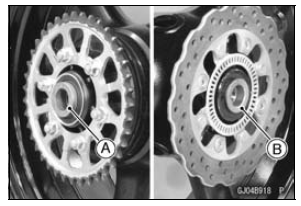
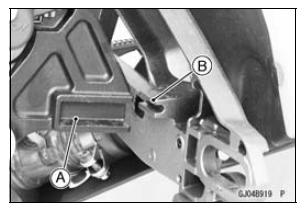
NOTE
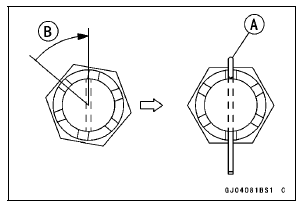
| WARNING A loose axle nut can lead to an accident resulting in serious injury or death. Tighten the axle nut to the proper torque and install a new cotter pin. |
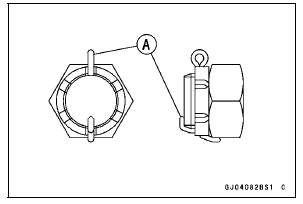
| WARNING After servicing, it takes several applications of the brake pedal before the brake pads contact the disc, which could result in increased stopping distance and cause an accident resulting in injury or death. Do not attempt to ride the motorcycle until a firm brake pedal is obtained by pumping the pedal until the pads are against the disc. |
 Rear Wheel Removal
 Wheel Inspection
Precautions
There are a number of important precautions that are
musts when servicing electrical systems. Learn and observe
all the rules below.
Do not reverse the battery cable connections. This will
burn out the diodes on the electrical parts.
Always check battery condition before condemning other
...
General Precautions
Frequent and proper care of your
Kawasaki motorcycle will enhance
its appearance, optimize overall performance,
and extend its useful life.
Covering your motorcycle with a high
quality, breathable motorcycle cover
will help protect its finish from harmful
UV rays, pollutants, and reduce the ...
Wheel Bearing Damage Inspection
Raise the front wheel off the ground with the jack (see
Front Wheel Removal in the Wheels/Tires chapter).
Special Tools - Jack: 57001-1238
Jack Attachment: 57001-1608
Turn the handlebar all the way to the right or left.
Inspect the roughness of the front wheel bearing by moving
[A] ...