
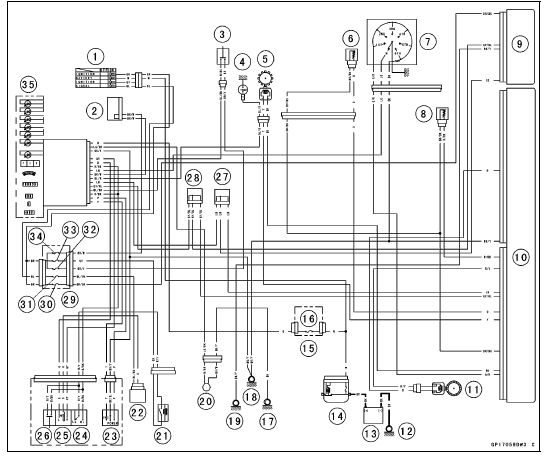
1. Ignition Switch
2. Joint Connector F
3. Stop Watch Button
4. Oil Pressure Switch
5. Crankshaft Sensor
6. Water Temperature Sensor
7. Gear Position Switch
8. Intake Air Temperature Sensor
9. ESD ECU (ZX1000JD/KD)
10. ECU
11. Rear Wheel Rotation Sensor
12. Engine Ground
13. Battery 12 V 6 Ah
14. Main Fuse 30 A
15. Fuse Box 2
16. Meter Fuse 10 A
17. Frame Ground 3
18. Frame Ground 1
19. Frame Ground 4 (ZX1000JD/KD)
20. Fuel Reserve Switch
21. Headlight Relay
22. Turn Signal Relay
23. Mode Switch
24. Dimmer Switch
25. Turn Signal Switch
26. Passing Button
27. Joint Connector D
28. Joint Connector C
29. Fuse Box 1
30. ESD Fuse 10 A (ZX1000JD/KD)
31. Turn Signal Relay Fuse 10 A
32. Brake Light/Horn Fuse 10 A
33. Headlight Relay Fuse 15 A
34. Ignition Fuse 15 A
35. Meter Unit
 Check 3-7 Stop Watch Inspection
 Meter Unit Circuit (ZX1000K Model)
Shift Fork/Gear Groove Wear Inspection
Measure the thickness of the shift fork ears [A], and measure
the width [B] of the gear grooves.
If the thickness of a shift fork ear is less than the service
limit, the shift fork must be replaced.
Shift Fork Ear Thickness
Standard: 5.7 6.0 mm (0.224
0.236 in.)
Service Limit: 5.6 mm ...
Terminal Numbers of ECU Connectors
1. Subthrottle Valve Actuator: Y/BK
2. Subthrottle Valve Actuator: BK/O
3. Unused
4. Front Wheel Rotation Sensor Signal: G/Y
5. Unused
6. Starter Lockout Switch: R/G
7. Gear Position Switch: G/R
8. Crankshaft Sensor (–): BK
9. Power Supply to Sensors: BL
10. Unused
11. Intake Air Pre ...
Vehicle-down Sensor Output Voltage Inspection
Remove the vehicle-down sensor.
Connect the measuring adapter [A] to the vehicle-down
sensor connectors as shown in the figure.
Special Tool - Measuring Adapter: 57001-1700
Main Harness [B]
Vehicle-down Sensor [C]
Connect a digital meter [D] to the measuring adapter
leads.
V ...